For developers
Open models. More freedom to build voice technology.
Great voice ideas can come from anywhere. We want developers to have room to inspect, experiment, and choose how they build—with published models as well as a hosted platform.
Human-like voice agents. 11 Indian languages and English.
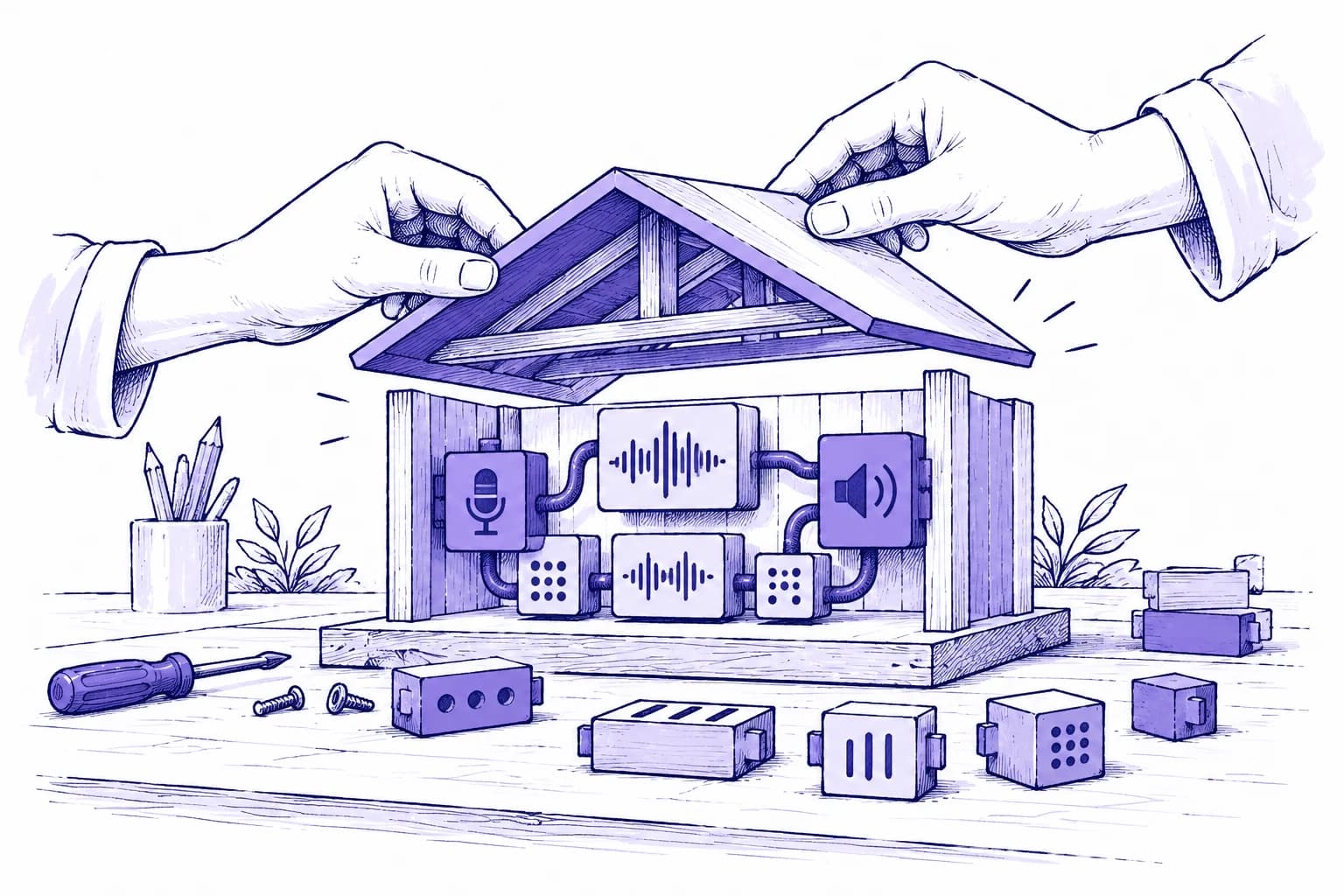
Give builders something they can explore.
Swarit Indic Talk is published on Hugging Face. The model page is the place to find its files, license information, and release details. Start there when evaluating what you can run, adapt, and use in your own project.
Open access to a model gives developers another way to explore voice technology. It also gives researchers and small teams a concrete starting point for their own evaluations. Review the model’s actual license and requirements before deciding how to use it.
Choose the path that fits your project.
Some teams want to work directly with a published model. Others want a hosted realtime session so they can spend their time on the application. Swarit is building for both paths.
Working with model files means taking responsibility for serving, capacity, and the surrounding application. The platform approach provides a session interface for a hosted conversation. Decide based on the control you need and the infrastructure you want to operate.
Make room for Indian-language ideas.
Imagine an interview practice tool that lets a learner rehearse in a familiar language. Or an interface where someone explains what they need instead of navigating a long form. These are product ideas to explore, not claims of finished Swarit integrations.
Start with the people you want to serve. Test the vocabulary they use, the names they say, the noise around them, and the corrections they make. Your application needs to work in their conversation, not only in a polished demonstration.
Published models and upcoming services have different availability.
The Models page separates the published Swarit Indic Talk model, the realtime platform integration preview, and upcoming standalone speech services. TTS and STT API access are coming soon while we update the infrastructure and architecture.
A published voice model does not mean every hosted endpoint is available today. We will describe each service’s access, model details, and pricing on its own terms.
Bring your own idea.
Explore the model release, try a conversation in the playground, and read the session documentation. Build something small enough to test and useful enough that someone will want to use it again. That is the kind of voice innovation we want to make more accessible.